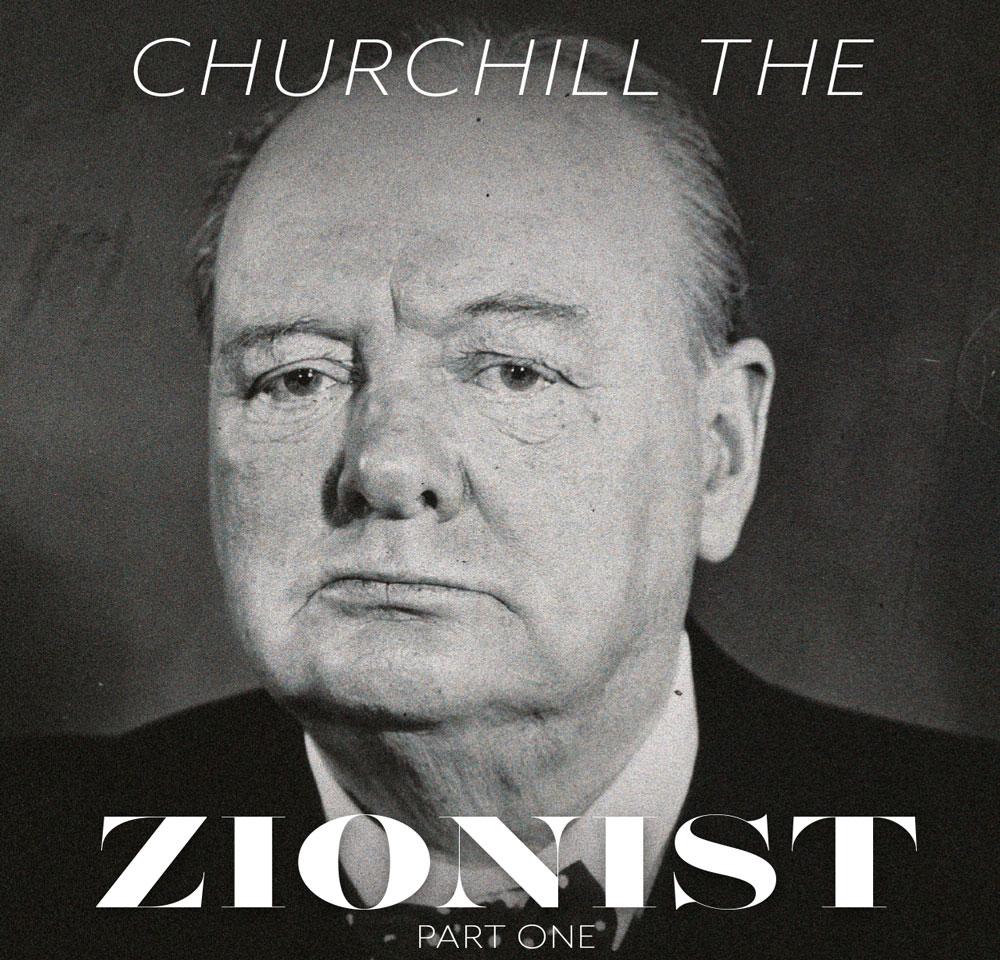
On 8th November 1931, at the dawn of an era that would culminate in genocide of the Jewish people, Winston Churchill published a piece in the Sunday Chronicle, titled Moses: the Leader of a People. It is simply profound.
In verbose that only Churchill could pen, he told the story of the Exodus with colourful zeal for the Biblical account. Churchill, who was temporarily out of office, gave persuasive historical and scientific evidence to support the ‘truth of the Bible story’ whilst giving his own angle from a perspective as a political leader. Describing Moses with deep admiration, and perhaps even aspiration, Churchill wrote:
“He was the greatest of the prophets who spoke in person to the God of Israel, he was the national hero who led the chosen people out of the land of bondage and brought them to the very threshold of the Promised Land, he was the supreme lawgiver who received from God that remarkable code on which the religious, moral, and social life of the nation was so securely founded.”
Drawing parallels between the Exodus and the Zionist movement of his time, Churchill expressed an understanding of the uniqueness of God’s Chosen People:
“This wandering tribe, in many respects indistinguishable from numberless nomadic communities, grasped and proclaimed an idea of which all the genius of Greece and all the power of Rome were incapable. There was to be only one God, a universal God, a God of nations, a just God, a God who would punish in another world a wicked man dying rich and prosperous; a God from whose service the good of the humble and of the weak and poor was inseparable.”
But it was his perception of Pharaoh’s hardened behaviour that Churchill draws an almost chilling analogy. Interwoven between this retelling of the Exodus was a prose that could simply be described as prophetic.
Whether knowingly or not, Churchill made an unsettling connection that linked the oppression of Jews with eventual genocide. Whilst many were repulsed by Hitler’s anti-Semitism, few foresaw that it would lead to the Holocaust.
A ‘prophetic’ view
Churchill was a leader of great foresight. God had raised up a Prime Minister in the United Kingdom to lead this nation with courage and wisdom during its darkest hour. His understanding both of Bible history and God’s covenant with the Jewish people, were foundational to his view of Zionism as well as his understanding of the implications of the Holocaust. As storm clouds gathered over mainland Europe, Churchill saw what many others failed or refused to see. Throughout the 1930s Churchill was outspoken regarding Britain’s need to prepare militarily to counter Hitler. For example, as early as 1933 he predicted an invasion of Poland, six years before it happened. It was with similar foresight that Churchill raised alarm concerning the rising persecution of the Jews.
In his radio broadcast of 24 August 1941, just two months after the Einsatzgruppen killing units began the systematic murder of the Jewish people, Churchill announced that Jews in “whole districts are being exterminated,” adding, “We are in the presence of a crime without a name.”
Long before the Nazis were systematically killing Jews in extermination camps, Churchill understood that what was yet to be called the Holocaust was something more than mass murder. This “crime without a name” threatened the total extermination of the Jewish people from the face of the earth. Churchill’s grasp of Jewish history meant he was already well versed in identifying what this looked like and why this new enemy had to be defeated.
Early influences
Between 1904-1908, Churchill was MP for Manchester north where one third of constituents were Jewish. He joined the Jewish soup kitchen and the Jewish tennis and cricket club and regularly visited Jewish institutions such as the hospital and religious school. In 1905, while speaking at the Jewish Working Men’s Club in the Manchester suburb of Cheetham, Churchill praised their community work, saying, “In the work you do in this part of Manchester you have the spirit of your race and your faith. Guard it; keep it; it is a precious thing. It is a bond of union, it is an inspiration and a source of great strength.”
In the same year, Churchill opposed the anti-Semitic ‘Alien’s bill’ which sought to prevent Jews fleeing the Russian Pogroms from coming to Britain. It was through this that he first met someone he was to come to greatly admire, Belarusian-born chemist, Chaim Weizmann, who was a prominent Zionist leader in Manchester. Churchill once described Weizmann as being like “an Old-Testament prophet” and personally helped him gain British naturalisation. Weizmann would later become the first President of Israel.
In his early years, Churchill had been personally blessed by several Jewish associates. In particular, Sir Felix Semon, a friend of his father, helped Churchill overcome a slight speech impediment. In his biography, Dr. Semon commented, “I have just seen the most extraordinary young man I have ever met”. That young man would become Britain’s most famous orator that every lived.
In a speech in January 1908, at a public meeting of the British Zionist Federation, Churchill declared, “I am in full sympathy with the historical traditional aspirations of the Jews. The restoration to them of a centre of true racial and political integrity would be a tremendous event in the history of the world.”
A passion for Jewish values
It is with this in mind that we begin to understand Churchill’s view of Zionist efforts to seek a haven for the Jews in their historic and ancestral homeland, the Covenanted Land of Israel. Churchill played a significant part in creating the Balfour Declaration of 2 November 1917 in which British Foreign Secretary, Arthur Balfour, gave the UK’s commitment to the establishing of a Jewish homeland in the newly created British Mandate of Palestine.
In a 1920 article, Zionism versus Bolshevism, Churchill began,
“Some people like Jews and some do not; but no thoughtful man can doubt the fact that they are beyond all question the most formidable and the most remarkable race which has ever appeared in the world.”
He continued, “We owe to the Jews in the Christian revelation a system of ethics which, even if it were entirely separated from the supernatural, would be incomparably the most precious possession of mankind, worth in fact the fruits of all other wisdom and learning put together. On that system and by that faith there has been built out of the wreck of the Roman Empire the whole of our existing civilisation.”
As well as appreciating these Judeo-Christian values, Churchill observed something very special about God’s chosen people. Whilst mocking Germany during the war, he once quipped, “Since the Germans drove the Jews out and lowered their technical standards, our science is definitely ahead of theirs.”
‘A temple of Jewish glory’
In the same 1920 article, under the heading ‘A Home for the Jews’, Churchill stated strongly, “But if, as may well happen, there should be created in our own lifetime by the banks of the Jordan a Jewish State under the protection of the British Crown, which might comprise three or four millions of Jews, an event would have occurred in the history of the world which would, from every point of view, be beneficial, and would be especially in harmony with the truest interests of the British Empire.”
And he concluded that important article by reiterating the importance of “building up with the utmost possible rapidity a Jewish national centre in Palestine which may become not only a refuge to the oppressed from the unhappy lands of Central Europe, but which will also be a symbol of Jewish unity and the temple of Jewish glory.”
In his first visit to the Holy Land in March 1921, Churchill, now Secretary of State for the Colonies, planted a tree in a ceremony on Mount Scopus in Jerusalem, the future location of the Hebrew University of Jerusalem. Churchill declared to the Jewish people, “The hope of your race for so many centuries will be gradually realized here, not only for your own good but for the good of all the world.”
“Personally, my heart is full of sympathy for Zionism,” he told listeners, “I believe that the establishment of a Jewish National Home in Palestine will be a blessing to the whole world, a blessing to the Jewish race scattered all over the world, and a blessing to Great Britain. I firmly believe that it will be a blessing also to all the inhabitants of this country without distinction of race and religion.”
In the 1921 Report on the Middle East Conference held in Cairo and Jerusalem, Churchill is quoted as saying that if the Jews in Israel would work diligently toward their goal of establishing a Jewish state, then the Holy Land would turn into the promised land, as prophesied in the Bible, “a land flowing with milk and honey, in which sufferers of all races and religions will find a rest from their sufferings.”
Churchill’s visit to the Holy Land had a significant influence on him. Seeing the landscape for himself and witnessing how a Jewish minority had turned the deserted and desolate marshland into a blooming oasis energised Churchill even more and proved to him that the Bible was being brought to life by the people of the Bible in the land of the Bible.
Alastair Kirk – Christians United for Israel

This article first appeared in the CUFI UK Torch Magazine (Issue #16, August 2020)
To receive future issues and access to all past issues of the Torch Magazine, please subscribe for free at www.cufi.org.uk/subscribe