Part 2 of the Debunking Replacement Theology series

This article first appeared in the CUFI UK Torch Magazine (Issue 26, Autumn 2024).
To receive future issues and access to all past issues of the Torch Magazine, please subscribe for free at www.cufi.org.uk/subscribe
In the days in which we are living, there is an increasing assault on all of God’s covenants and their attributes. The reason is because God’s enemy, Satan, is determined to destroy God’s plans and undermine His promises. By targeting the Biblical covenants, Satan is trying to thwart God’s plans, but he will not succeed. Replacement Theology, the false doctrine that teaches that the Church has replaced Israel, is part of this deception that has influenced many churches.
The God of Israel is covenant-making and covenant-keeping. There is not a promise that God has made that He does not keep. In the Bible, we see God’s relationship with mankind through covenants. Some of these covenants are made directly with the nation of Israel; some are with mankind as a whole; and some are with both. The purpose of God’s covenants is for us to understand the character of Almighty God and His terms for us being in relationship
with Him.
Unconditional covenants magnify the grace and favour of our Lord; conditional covenants remind us of our accountability to God’s authority. Furthermore, in a world that has largely rejected the One True God, the covenants reveal His great love by making it possible for sinful people to enter into communion with Him.
It is important to understand that every covenant that God has made is under attack. In this article, we will focus primarily on the covenants that relate to Israel. But let us begin by outlining seven main covenants that we can identify in the Bible.
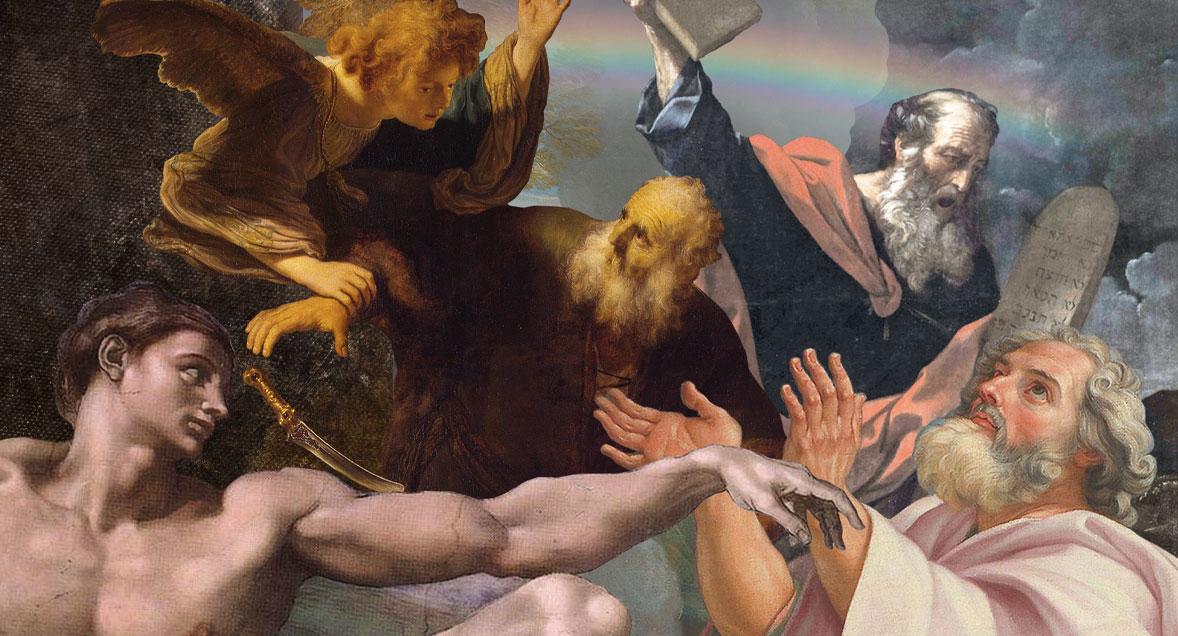
The Adamic Covenant centres around God’s command to Adam regarding the tree of the knowledge of good and evil. Its backdrop is the truth that God created the world and everything in it and saw that it was good; God made man in His own image; He created male and female with the instruction to be fruitful and multiply, commissioned man with the mandate to care for Creation, and willed for mankind to walk in communion with Him. The rebellion of Adam and Eve introduced the curses against mankind as well as God’s provision for that sin.
The Noahic Covenant is an unconditional and everlasting covenant that God made with Noah, his descendants, and with every living creature. After the Flood, God gave the rainbow as the sign of the covenant promising that in God’s mercy there would never again be a worldwide flood to destroy the earth.
The Abrahamic Covenant is also an unconditional and everlasting covenant, meaning that it will never be rescinded. Within the Covenant, God made several promises to Abraham and his physical descendants pertaining to blessing and the making of a great nation. This covenant was reaffirmed to Isaac and Jacob, allowing no confusion as to whom the inherited blessing was promised. Their blessing also included a physical promised land and the provision of a Messiah. All the families of the earth would be blessed through this covenant. The blessing pronounced upon Rebekkah before being betrothed to Isaac incorporates the special covenant of marriage that would be integral to generations of Abraham’s descendants inheriting their promised blessing.
The Land Covenant is intrinsically linked to the Abrahamic Covenant, but some theologians single it out as a conditional element relating to the Promised Land. This doesn’t undermine the fact established in the Abrahamic Covenant in which God gave the Land of Israel as an eternal inheritance to the Jewish people. Rather, it is centred on the terms of Deuteronomy 30:3-4, which says that if the children of Israel disobeyed, they would be scattered around the world; but by the same promise, God would restore the nation and bring the Jewish people back to the land where God would cause them to prosper.
The Mosaic Covenant is a conditional covenant given to Moses for the children of Israel. It is centred around the Ten Commandments and the rest of the Law. Obedience to the Law brought blessing and disobedience brought a curse (Deuteronomy 11:26-28).
The Davidic Covenant also relates to the outworking of the Abrahamic Covenant, but it pertains to the promises made specifically to King David that affirm that David’s lineage would last forever and that his kingdom would never pass away (2 Samuel 7:8-16). The Bible also says that there will be a time when a future King will again sit on the throne of David and establish His rule over the earth from Jerusalem (Luke 1:32-33).
The New Covenant was made with the nation of Israel (Jeremiah 31:31-34) and is cited in Hebrews 8:7-13. As Christians, we believe that Jesus Christ came to fulfil the Law of Moses and establish a new covenant between God and His people through His death on the Cross, grafting Gentile believers into the blessings of the Abrahamic Covenant. Under the New Covenant, Jews and Gentiles can be free from the penalty (the curse) of the Law and receive salvation as a free gift (Ephesians 2:8-9).
Replacement Theology seeks to undermine every aspect of each Covenant that God has made with the Jewish people. The false teaching that the Church has replaced or is a fulfilment of Israel conflicts directly with the above Covenants. Let’s look at some examples.
Everlasting means everlasting
Replacement Theology attempts to disqualify the physical descendants of Abraham, Isaac and Jacob (the Jewish nation) from the everlasting blessings of the Abrahamic Covenant. We will challenge this in more detail in a future issue, but it is important to make clear that the Bible emphasises that God’s Covenant with Abraham is an everlasting covenant. It is unconditional and has multiple aspects. Let’s take a look at Genesis 17:6-8:
“I will make you exceedingly fruitful; and I will make nations of you, and kings shall come from you. And I will establish My covenant between Me and you and your descendants after you in their generations, for an everlasting covenant, to be God to you and your descendants after you. Also I give to you and your descendants after you the land in which you are a stranger, all the land of Canaan, as an everlasting possession; and I will be their God.”
From this Scripture we learn that God’s Covenant with Abraham would be for all generations of their descendants and it would be everlasting (Genesis 17:7); it would be fruitful and would produce kings and nations (Genesis 17:6); it would include a Promised Land as an everlasting possession (Genesis 17:8), and He promised to be their God; and if these promises to Abraham weren’t wonderful enough, God also promised it would be through Abraham’s seed that a Messiah would come to Israel, and that the blessing of Abraham would also come upon the Gentiles through faith in Him (Galatians 3:14-16).
The New Testament reaffirms the promise made to Abraham, adding that God sealed the promise by swearing by the highest authority in the universe – Himself.
“For when God made a promise to Abraham, because He could swear by no one greater, He swore by Himself, saying, “Surely blessing I will bless you, and multiplying I will multiply you,” Hebrews 6:13.
Confusion over covenants
The false teaching of Replacement Theology has the tendency to obscure how Christians view the Covenants in the context of the Church. It is therefore important to understand how the Covenants are framed in the New Testament.
The New Covenant has NOT replaced the Abrahamic Covenant
Some Christians wrongly confuse the Mosaic Covenant (conditional) and the Abrahamic Covenant (unconditional). As a result, they wrongly assert that the New Covenant has replaced the Abrahamic Covenant. However, only the Mosaic Covenant is described as having been made obsolete by the introduction of the New Covenant. Nowhere in the Bible does it say that God’s promises to Abraham have been replaced by the New Covenant, rather the New Covenant relates to the Abrahamic Covenant in fully understanding how Gentiles have become partakers of the blessing.
The Mosaic Covenant promised conditional blessing through keeping the law, but the Abrahamic Covenant promises unconditional blessing because of God’s favour. The Mosaic Covenant promised cursing upon those failing to keep the law, but the New Covenant promises redemption through the work of the Cross (Galatians 3:13). Therefore, Replacement Theology’s conflating of Covenants is a deliberate attempt to create confusion and perpetuate the heresy that the promises to Israel are null and void.
The New Covenant has not “destroyed” the old
English translations of Hebrews 8:13 describe the original covenant of law as “obsolete”, “old”, “fading away”, and “growing old”. This is because God has fulfilled (not merely replaced it) through the work of Christ, which brings salvation through faith and not by works. Hebrews 8:6 refers to the New Covenant as a “better covenant, which was established on better promises.” And Hebrews 9:15 explains that the purpose of the New Covenant is related to the purpose of the first:
“And for this reason He is the Mediator of the new covenant, by means of death, for the redemption of the transgressions under the first covenant, that those who are called may receive the promise of the eternal inheritance.”
Galatians 3:19 says that the law was given till the ‘Seed’ (Christ) came. Galatians 3:23 says that “we were kept under the law,” or in some versions, “in custody under the law.” Verse 24 says “the law was our tutor to bring us to Christ.” Our attitude as Christians to the Mosaic Law should be how Jesus viewed it. In Matthew 5:17 we read Jesus’s words: “Do not think that I came to destroy the Law or the Prophets. I did not come to destroy but to fulfill.”
Even though the New Covenant has in effect made the Mosaic Covenant “old”, Christians should recognise that the Jewish Law, including the Ten Commandments, is foundational in understanding our Christian faith and God’s code of what constitutes sin. Christians owe a debt of gratitude to the Jewish people who have been custodians of the oracles of God for thousands of years. Let us not take for granted the precious gift of the Torah, and the whole Hebrew Scriptures, and how they connect us as Christians with the Jewish roots of our faith.
Any Christian who dismisses the “Old Testament” as no longer pertinent to Christians is making a huge theological mistake and gives ground to Satan who is on the attack to destroy the Law of God. The danger of Replacement Theology is that it has the tendency to dismiss the Old Testament as being “old” with the belief that the New Testament has replaced it. Other forms of Replacement Theology contend that the “Old Testament” is still important but that all the promises to Israel have been appropriated for the Church and that the nation of Israel today bears no connection. This is simply not Biblical.
The New Covenant was given to Israel
Under the influence of Replacement Theology, some Christians wrongly conclude that the New Covenant was given only to the Church. But Jeremiah 31:31-34 clearly says that the New Covenant was given to Israel:
“Behold, the days are coming, says the Lord, when I will make a new covenant with the house of Israel and with the house of Judah— not according to the covenant that I made with their fathers in the day that I took them by the hand to lead them out of the land of Egypt, My covenant which they broke, though I was a husband to them, says the Lord. But this is the covenant that I will make with the house of Israel after those days, says the Lord: I will put My law in their minds, and write it on their hearts; and I will be their God, and they shall be My people.”
It is unmistakable that according to the Bible, the New Covenant was promised to Israel. The “house of Israel” and “house of Judah” is clearly referring to the Jewish people. And it says that it will be different to the covenant given to Moses, which was conditional. Rather, the Law will be inscribed in their minds, on their hearts, and will be the catalyst for God restoring relationship with His people. The promise of the New Covenant is still completely valid for Israel. The Bible teaches that Israel will enter into this Covenant in a full sense in the future. Regarding the Church, it is important to remember that Gentiles have not replaced, but have been “grafted in” to the blessings of Abraham through faith. The Mosaic Law would not have been able to do this. Galatians 3:18 says, “For if the inheritance is of the law, it is no longer of promise; but God gave it to Abraham by promise.”
The New Covenant points to the Abrahamic Covenant
Galatians 3:8-9 says, “And the Scripture, foreseeing that God would justify the Gentiles by faith, preached the gospel to Abraham beforehand, saying, ‘In you all the nations shall be blessed.’ So then those who are of faith are blessed with believing Abraham.”
Notice in this verse how it was God’s wonderful, foreordained plan to “justify the Gentiles by faith” when making the promise to Abraham two thousand years before Christ. This completely challenges the spirit behind Replacement Theology, which has the audacity to portray the Church as snatching Israel’s blessings because of Israel’s ‘failings’ rather than a result of God’s providential plan for all of mankind.
Galatians 3:14 reiterates the reason Christ came to redeem us from the curse of the law, “that the blessing of Abraham might come upon the Gentiles in Christ Jesus, that we might receive the promise of the Spirit through faith.” In this sense, Christ fulfilled both the Mosaic Covenant and an aspect of the Abrahamic Covenant (and will ultimately fulfil the Davidic Covenant in its fullness). These fulfilments occurred without ever invalidating God’s everlasting promise to the Jewish people.
So, the New Covenant, which is for both Jew and Gentile, has brought those who believe into the blessings of Abraham. The New Covenant connects and amplifies the Abrahamic Covenant; it doesn’t detract from it. Every time we remember the New Covenant through Jesus’s death at Calvary, we must also remember with gratitude the promise first given to Abraham and the Jewish people.
The Land has not been ‘replaced’
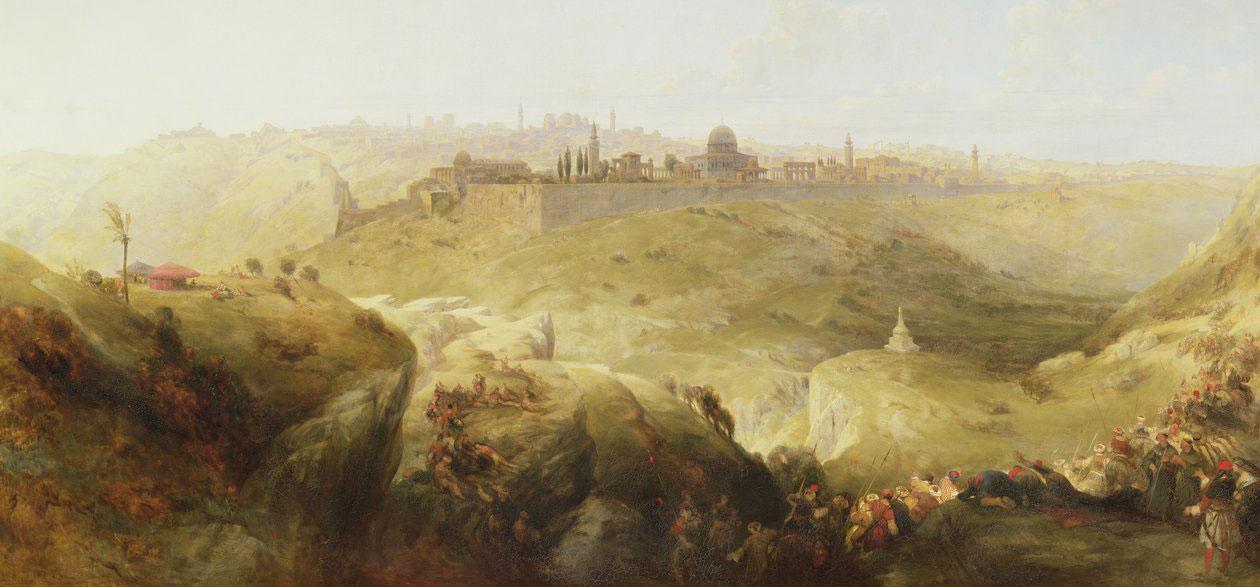
The Abrahamic Covenant, Land Covenant and Davidic Covenant are subject to attack because they all affirm that the Land of Israel belongs to the Jewish people. This includes Jewish sovereignty over Jerusalem. Delegitimising the Land of Israel through Replacement Theology undermines many other related Bible truths.
Replacement Theology is a slippery slope. Once you begin replacing Israel with the Church, every promise to the Jewish people is undermined. It is therefore no surprise that those who entertain Replacement Theology often manifest negative views of the modern State of Israel. Christians who adopt replacement theology make a big mistake when they contend that the Land of Israel is no longer Israel’s inheritance. This also translates into a political form of replacement theology, seen evidently by many in the world that deny Israeli sovereignty and legality over the Land promised to them by God.
The Davidic Covenant asserts that a Jewish King (Messiah) will reign from Israel’s Royal capital, Jerusalem. Only Jews and Bible-believing Christians are excited about this certainty, so it is no wonder Jerusalem is the epicentre of spiritual and physical warfare. It also explains one reason why most nations have hardened their hearts towards Jerusalem and stubbornly made excuses rather than recognise Jerusalem as Israel’s rightful capital. For Christians, failure to recognise the connection between Christ’s return to Jerusalem and a Jewish presence in their historic homeland, creates all kinds of eschatological anomalies.
The Land Covenant asserts that the Jewish people will return to the Land of their inheritance. This return began in a formal sense when the State of Israel was established in 1948, but it was almost immediately prevented by the invasion of surrounding Arab armies. The Jewish people continue to return to their ancestral homeland, and to this day multiple enemies of Israel continue to try to wipe out the Jewish people’s presence in the Land of Israel. Satan does not want the Jewish people to return to the Land, but God will assure that it happens. Replacement Theology’s dismissal of the covenanted land is a grave error, because the Bible clearly speaks of Israel’s repossession of the Land:
“‘I will plant them in their land, And no longer shall they be pulled up From the land I have given them,’ Says the Lord your God.” Amos 9:15
Finally, the Abrahamic Covenant also confirms that the Land given to Abraham, Isaac, Jacob and their descendants is not based on merit or condition. Exodus 24 tells us that the Land of Israel was sealed by a blood covenant between God and the Israelites. It is therefore non-negotiable, unmoveable, and unending. It is important to remember that God’s covenanted land is not only for the chief benefit of the Jewish people (and Christians) but is for the glory of God’s Holy Name. Ezekiel 32:22 says, “I do not do this for your sake, O house of Israel, but for My holy name’s sake.”
God’s Covenants provide so much hope for Israel, for Christians, and for the world. We serve a God who is faithful to keep all His promises.
“Therefore know that the Lord your God, He is God, the faithful God who keeps covenant and mercy for a thousand generations with those who love Him and keep His commandments.” Deuteronomy 7:2