
Part 3 of the Debunking Replacement Theology series

This article first appeared in the CUFI UK Torch Magazine (Issue 27, Spring 2025).
To receive future issues and access to all past issues of the Torch Magazine, please subscribe for free at www.cufi.org.uk/subscribe
Replacement Theology, also known as Supersessionism, argues that the Church has replaced Israel, implying that God’s Covenant with the Jewish people is now obsolete and that Israel is outside of God’s blessing. Some may even go as far as contending that references in the Bible speaking of Israel are now appropriated fully by the Church. They use expressions like “we are now Israel” and “Christians are now the chosen people, not Jews.” This is a dangerous error that undermines the physical nation of Israel.
Remember, God made an everlasting Covenant with Abraham, Isaac, Jacob, and all their descendants. This everlasting promise is not obsolete. The New Testament maintains a distinction between the Church (comprising of Jews and Gentiles believing in Jesus Christ starting, at Pentecost) and the nation of Israel, the Jewish people as inheritors of God’s promise to Abraham. In this article, we will refer to Israel as “ethnic Israel” to articulate that we mean the physical descendants of Abraham, Isaac, and Jacob (the Jewish people). This does not mean we don’t consider Israel to be spiritual – it just avoids confusion with the term ‘spiritual Israel’ that replacement theologians sometimes use as a synonym for the Church.
In light of the above, one can easily see how Replacement Theology is a trigger for antisemitism within the Church. Telling Christians that ethnic Israel is redundant not only influences Christian attitudes towards the Jewish people, but also places a negative perspective on the Jewish people’s rightful claim to their historic homeland, the Land that was part of the Covenant that replacement theologians seek to misappropriate. Replacement Theology, therefore, has a direct connection with antisemitism within the Church which is why it must be debunked using the truth of God’s Word.
Replacement Theology depends on Scripture being taken out of context. Here are three phrases from the New Testament that are commonly misread. Significantly, all three errors are associated with a disregard for ethnic Israel.
1. There is neither Jew nor Greek
The importance of identity
Have you ever heard another Christian use this phrase in debating Israel? This phrase is often used in isolation to undermine Jewish identity and the Jewish people’s distinct uniqueness separate from Gentiles.
Often in a debate about Israel, Christians will say “there is neither Jew nor Greek” to undermine the legitimacy of Israel as a promised land for the Jewish people.
When Paul used this phrase in Romans 10:12 and in Galatians 3:28, he was clearly explaining that there is spiritual equality found in Jesus Christ. The latter verse doesn’t only refer to ‘Jew or Greek’, it also says there is neither ‘male nor female’. But replacement theologians never argue that there is no distinction between a man or woman. They do not try to change the definition of male or female. Nor do they insist that men who do not believe in Jesus should stop claiming they are men, in the same way that Jews in the natural are denied being Jewish.
“There is neither Jew nor Greek, there is neither bond nor free, there is neither male nor female: for ye are all one in Christ Jesus” – Galatians 3:28
Whilst we understand the wrongs of slavery, at the time of Paul’s writing there would have been great comfort to the bondservant knowing that they had the same spiritual inheritance as the free man, and this Biblical revelation reformed Christian thinking about the issue.
When it comes to spiritual inheritance, any person that has faith in Jesus Christ, whether they are a Jew or Gentile, male or female, are all equal in the sight of God and are all part of Abraham’s seed (Gal 3:29). They have a new spiritual identity that unites. Yet despite being one in Christ, all people (Jew, Gentile, male, female) maintain their differential natural identity.
Ephesians 2:15 and Colossians 3:11 convey a similar theme, describing this unity in Christ as the “one new man,” but again it emphasises that it is through faith in Christ that this spiritual identity is shared by both Jew and Gentile.
However, there are Christians misled by Replacement Theology that take this very clear definition of shared identity in Christ, and misappropriate it to cast negative opinion on Jews that do not believe in Christ. They might not have ill-feeling towards Jews in the humanitarian sense, and may have compassion on Jews who suffer antisemitism, but when it comes to their Biblical understanding of the Jewish people, they use it to undermine their profile in the eyes of God. It was this attitude that contributed to antisemitism as far back as the Middle Ages, in the name of Christianity.
When it comes to viewing Israel as a nation, this premise is a catalyst for disdain towards the Jewish state. They suggest that if non-believing Jews no longer have spiritual legitimacy as part of Abraham’s Covenant, then they no longer have rights to the Covenant land. They might acknowledge the Jewish historical and Biblical connection to the Land, but not as an inheritance. This is why many churches within the UK demonstrate no support for Israel, but even lean towards pro-Palestinian support, or even hatred towards Israel – the root cause is Replacement Theology.
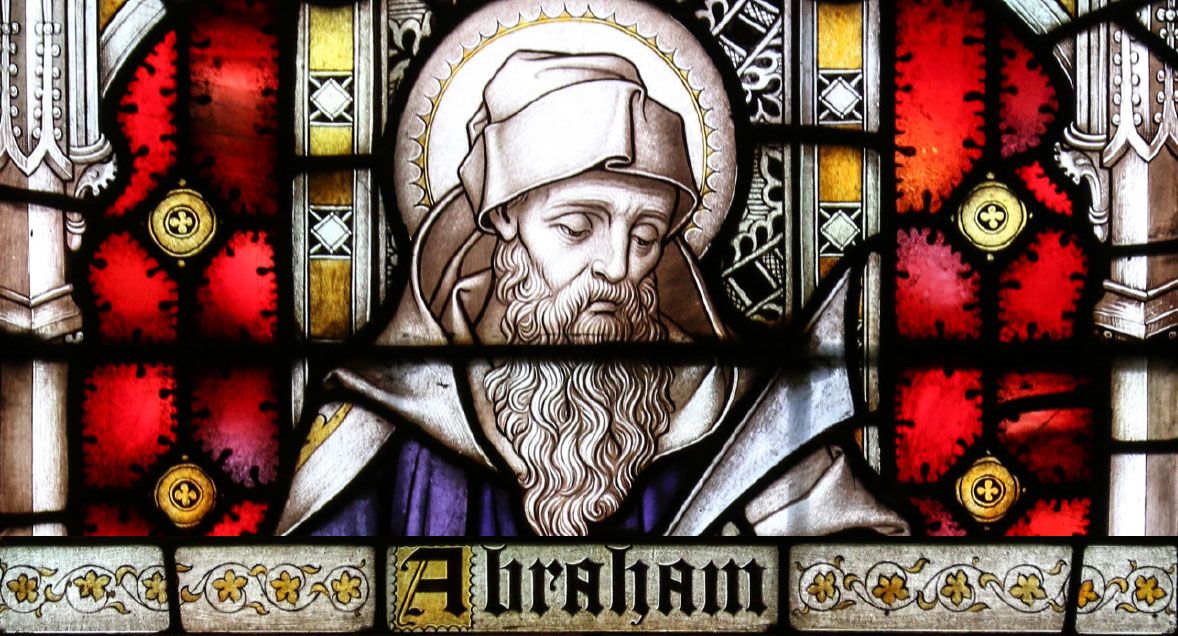
2. Abraham’s seed
The importance of inheritance
This phrase isn’t taken out of context as such. Rather it is often subject to false dichotomy. The “seed of Abraham” in the New Testament pertains to both spiritual and physical seed. Replacement theologians focus heavily on the former and not the latter.
Let’s look at the three correct Biblical definitions of the seed of Abraham. There is no contradiction in Scripture, so these definitions do not conflict with one another. In fact, they all derive from God’s Covenant made with Abraham in Genesis.
Christ is Abraham’s seed
Ephesians 3:16 states,
Now to Abraham and his Seed were the promises made. He does not say, “And to seeds,” as of many, but as of one, “And to your Seed,” who is Christ.
Christians are Abraham’s spiritual seed and heirs through faith
Ephesians 3:29 states,
And if you are Christ’s, then you are Abraham’s seed, and heirs according to the promise.
The Jewish people are Abraham’s physical seed
The Apostle Paul penned in Romans 11:1, “For I also am an Israelite, of the seed of Abraham, of the tribe of Benjamin.”
As you can see, all three of these definitions of Abraham’s seed are of paramount importance. The promise to Abraham helps shape our understanding of the spiritual inheritance and blessing that Gentiles have received in Christ through faith. The promise to Abraham also helps shape our understanding of the physical inheritance Jews have received through Abraham’s faith – a covenant that has not been replaced. When Paul was referring to himself as Abraham’s seed, he was acknowledging his own natural identity as a Jew, in an introduction about how God has not forsaken the Jewish people – the physical seed of Abraham.
3. “Not all are Israel”
The importance of purpose
The Church comprises of Jews and Gentiles who believe in Christ, but some who support Replacement Theology contend that this means that there is no longer a promise and purpose for ethnic Israel. One of the common verses used is Romans 9:6: “For they are not all Israel who are of Israel”.
In isolation, this phrase might appear to question the continuing profile of an ethnic Israel alongside the Church. This causes some replacement theologians to cast doubt over all definitions of Israel and take every mention of Israel by name and synonymise it with the Church.
The important take-away from Romans 9-11 is this: it is a message to the Gentiles. It is not a letter of condemnation of Israel. This is what so many proponents of Replacement Theology ignore.
There is a certain mystery about this verse and what qualifies or disqualifies what is defined as “of Israel”, but if we begin with the presupposition that Gentiles have been grafted into the Abrahamic root and that there are natural branches (ethnic Israel), currently broken off but that will be grafted in again, then we must acknowledge that God’s Covenant made with Israel is what is ultimately God’s sovereign purpose for both Jews and Gentiles to enter into.
Notice the following passage in Ephesians 2:11-12. It addresses Gentiles specifically and not Jews, describing Gentiles as once being “aliens from the commonwealth of Israel”. Imagine the British Commonwealth. Britain is foundational and central to the Commonwealth, but the Commonwealth nations, distinguishable from Britain, are today received under this extended umbrella of unity, without voiding Britain’s individual natural sovereignty. It is similar with the Commonwealth of Israel, except at one point it was impossible for Gentiles to become children of Abraham.
“Therefore remember that you, once Gentiles in the flesh—who are called Uncircumcision by what is called the Circumcision made in the flesh by hands— that at that time you were without Christ, being aliens from the commonwealth of Israel and strangers from the covenants of promise, having no hope and without God in the world. that at that time you were without Christ, being aliens from the commonwealth of Israel and strangers from the covenants of promise, having no hope and without God in the world.”
The book of Romans, chapters 9 to 11, clearly gives multiple examples of an ethnic Israel that remains in existence despite the initiation of the Church. Beginning with Romans 9 – the chapter from which this one isolated verse is misused to support Replacement Theology – we see how it actually disproves Replacement Theology.
Here are some examples:
Romans 9:3-5 – Notice Paul’s compassion for “my brethren, my countrymen according to the flesh.” Notice the wonderful attributes of ethnic Israel’s spiritual profile: they were chosen, they were promised, and they are blessed.
“For I could wish that I myself were accursed from Christ for my brethren, my countrymen according to the flesh, who are Israelites, to whom pertain the adoption, the glory, the covenants, the giving of the law, the service of God, and the promises; of whom are the fathers and from whom, according to the flesh, Christ came, who is over all, the eternally blessed God. Amen.”
Replacement theologians have a tendency to carry a judgemental approach towards Israel and the Jewish people, but Romans 9:22-24 says God is judge, not replacement theologians. God’s glory will be made known through His purposes by “making known the riches of His glory on the vessels of mercy, which He had prepared beforehand for glory, even us whom He called, not of the Jews only, but also of the Gentiles.”
Romans 9:18, reminds us of God’s divine purposes. He has a plan! “…Therefore He has mercy on whom He wills, and whom He wills He hardens.”
By the time we reach Romans 11, Paul is still referring to his natural countrymen. And throughout this chapter, Paul describes ethnic Israel numerous times as separate from Gentiles, describing the Jewish people as “beloved”. One cannot read Romans 11 without marvelling at God’s wonderful grace having not cast away His people, whom He foreknew: “If they do not continue in unbelief, will be grafted in, for God is able to graft them in again,” Romans 11:24.
Next time we will explore Romans 11 further in part 4 of our Debunking Replacement Theology series, titled Not Forsaken.
Three Bible phrases taken out of context