Natasha Hausdorff is a barrister who works with UK Lawyers for Israel and is a fantastic defender of Israel. Her expertise on international law puts to shame many UN so-called experts who are manipulating international law and spreading false propaganda to demonise Israel politically.
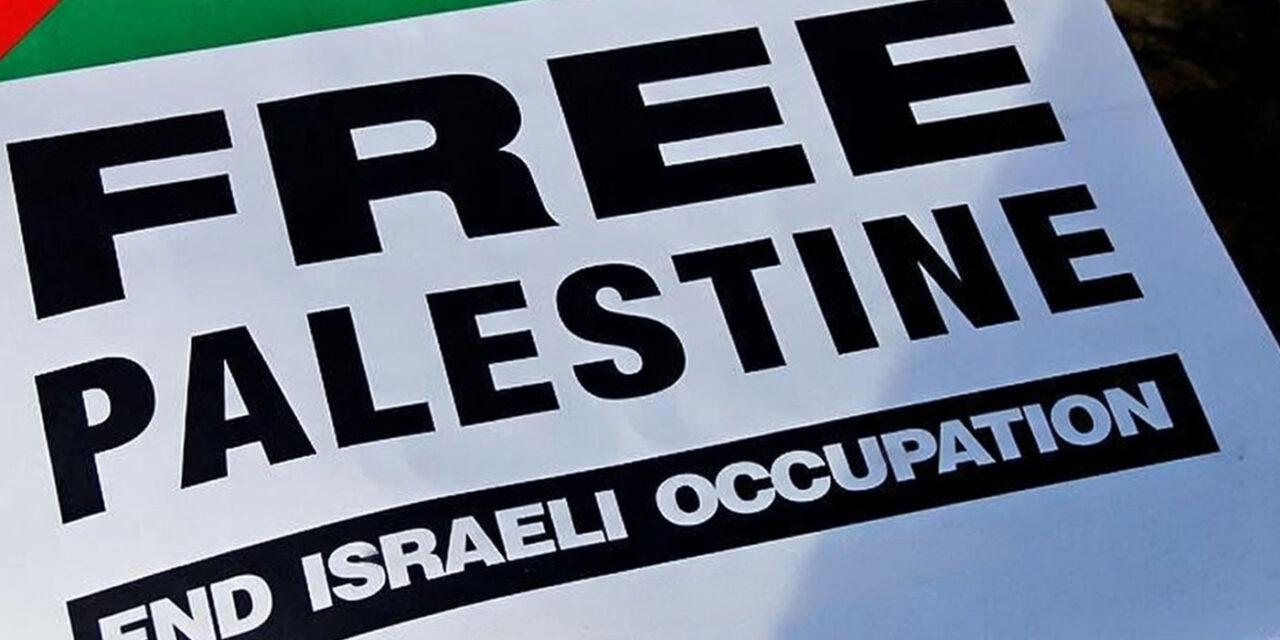
Last year, Natasha gave an in-depth interview with Triggernometry, and we want to highlight one area of this interview in particular, and that is the lie of ‘occupation’, something Natasha called a ‘blood libel’ against Israel.
We have long been stating, as Pastor Hagee says, “Israel does not occupy the land, they own the land.”
It was given to the Jewish people by God Almighty as written in the pages of the Bible. However, God also ensured that the land legally belongs to Israel today.
Israel’s legal ownership of the land in international law is the reason why the United Nations and international courts are unable to do anything to legally challenge Israel’s status. It is fully grounded in international law. Sadly, that doesn’t stop activists within those organisations from trying to undermine Israel’s legitimacy.
We’ll let Natasha explain it far better than we can. You can either read or watch below.
Transcript of the “Occupation” section of the video below:
Natasha Hausdorff: But if we come from the right starting point, which includes that this idea of an occupation is a misapplication of international law. And it is not accurate. I don’t know if we’ve got time to go into it now but there are really fundamental aspects of international law that are are being inverted and ridden over rough shod. And actually it’s probably important to just go into it briefly.
There is a a critical rule of customary international law that determines the borders of newly emerging states at their moment of independence. It is called ‘uti possidetis juris’. It’s applied universally wherever there is no agreement to the contrary. So, it’s the default rule. And in Israel’s case in 1948, it determined that the pre-existing administrative lines of the British mandate that preceded the state of Israel became Israel’s international borders when it declared independence. This is the rule that the pre-existing administrative lines become the new lines, the new borders of the state. And the reason that it was introduced was to promote stability and certainty and to prevent fracticidal struggles.
The international court of justice outlined these justifications for it when it recognized that it had become established. It was introduced in the 19th century applied in South America with the withdrawal of the Spanish. It’s applied in Asia and Africa also to the dissolution of the former communist federations.
Ukraine’s borders followed uti possidetis juris and that’s quite a critical comparison because I think the three of us would agree that Russia has been in occupation of Crimea from Ukraine. Why is that? Because Crimea was part of Ukraine according to the rule of uti possidetis juris at Ukraine’s formation. Well, in the same way when Israel came into existence, the West Bank and East Jerusalem and Gaza fell within that territory of the administrative lines of the pre-existing British mandate.
Now, that’s critical because immediately in this war of annihilation that I’ve described, Jordan occupies the West Bank in East Jerusalem from Israel and Egypt occupies Gaza. And that occupation ended in 1967 when Israel recovered that territory. That’s when this allegation of occupation for many people is dated from. The problem with that is you cannot occupy what is already your own sovereign territory.
Konstantin Kisin: I.e. if Ukraine was to retake Crimea and hold it, no one would say that was occupation of Crimea
Natasha Hausdorrf: From Russia.
Konstantin Kisin: Yeah.
Natasha Hausdorff: Indeed. And that is a stark parallel comparison. Now what Israel did in 1967 is it applied its law administration and jurisdiction in full over East Jerusalem. It reunited the city, but it didn’t do so in the West Bank. Instead, it applied a temporary framework.
Why? Because under the land for peace formula, it expected that it would give up some of the West Bank or Judea and Samaria to Jordan in pursuit of peace. But when the 1994 peace agreement with Jordan finally came about, Jordan didn’t want anything to do with the West Bank. So this temporary administrative framework that Israel established in 1967 held until the Oslo Accords and the creation of areas A, B, and C that we’ve described.
But the application of this term occupation is another blood libel because it has no basis in international law. It is used as a political term. And the preface to it, this illegal occupation which is so often referred to is also only ever applied to Israel.
There is no concept of illegal occupation in international law and in all the instances situations of real occupation in the context of that is which is envisaged by the Geneva conventions and the context of you know the real transfer of populations in Cambodia, Vietnam, in Nagoro Carabach in northern Cyprus none of these cases has this allegation of illegal occupation or illegal settlements even being advanced.
So this is another example of a modern blood libel being deployed against Israel in order to shape the discussion in order to shape the international politics and diplomacy in order then to put pressure on Israel. And we’ve seen the consequences of that I’m afraid in so many respects. This is what led to the 7th of October.